
Different Types of Testosterone: Cypionate, Enanthate and Undecanoate

Testosterone replacement therapy (TRT) is not a one size fits all treatment. Even when two products deliver the same hormone, the ester attached to testosterone changes how quickly it is released from the injection site, how smooth levels feel between doses, and how often you need to dose. The ester can also affect how different cells and tissues in the body absorb and use testosterone. Understanding the differences between cypionate, enanthate, and undecanoate helps patients make sense of why one option may fit their lifestyle and symptom goals better than another.
What Does an "Ester" Change
Testosterone itself is cleared quickly, so most injectable forms use an ester to slow absorption and prolong effect. After injection, the ester is cleaved and the body is exposed to the same active testosterone. This is why the biggest practical differences between esters are usually dosing interval, peak to trough variability, and tolerability of the carrier oil rather than "stronger" versus "weaker" testosterone.
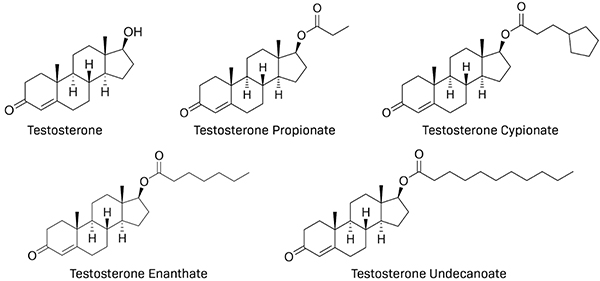
Testosterone Propionate
Testosterone propionate is a shorter acting ester than cypionate or enanthate, which means it reaches peak levels sooner and clears faster. Clinically, that would mean more frequent injections (often every other day, and sometimes daily) if the goal is to keep levels and symptoms stable. Due to the short half-life and rapid onset, testosterone propionate is rarely used alone, but can be combined with other longer-acting esters like cypionate or enanthate to provide short terms effects while blood levels of cypionate or enanthate rise.
Testosterone Cypionate
Testosterone cypionate is one of the most commonly used injectable esters in the US. It is generally treated as a short acting depot option, often dosed weekly, sometimes split into smaller doses 2 times per week to reduce peaks and troughs. For many patients, more stable levels translate to fewer swings in mood, energy, and libido across the week. Testosterone cypionate appears to be more anabolic than other forms of testosterone. Many patients find that testosterone cypionate helps with putting on muscle and burning more fat than other forms of testosterone.
Testosterone Enanthate
Testosterone enanthate is a closely related ester to testosterone cypionate. The dosing is very similar, often dosed once weekly, occasionally split into smaller doses. While testosterone enanthate is anabolic for muscle, many patients will report it is not quite as good for putting on muscle as testosterone cypionate. However, testosterone enanthate is seemingly better at improving libido and erectile function. The mechanisms are not quite understood, but testosterone enanthate appears to enhance erectile function and improve sexual drive better than cypionate.
Testosterone Undecanoate
Testosterone undecanoate is a long-acting injectable option designed to maintain normal range testosterone with much longer intervals between injections. In the US, the long-acting intramuscular product (AVEED) has specific administration requirements, including a post injection observation period due to rare but serious pulmonary oil microembolism reactions and anaphylaxis, and it is distributed under a specialized program. For patients we treat with testosterone undecanoate, we must perform the injection under ultrasound guidance. For the right patient, the benefit is convenience and fewer injections per year, but it is not the best match for everyone. Our practice is certified by the AVEED REMS Program to provide testosterone undecanoate injections, to provide our patients with a variety of options for TRT.
Oral vs Injectable Testosterone
There are two broad “oral testosterone” categories. First, older 17 alpha alkylated androgens (such as methyltestosterone) have well described hepatotoxicity risk and are generally avoided in modern TRT practice.
Second, newer oral testosterone undecanoate products exist, but they carry clinically important warnings about blood pressure increases and require careful patient selection and monitoring. For many patients, injectable therapy is more predictable for absorption and symptom control, and it avoids day to day variability related to meal timing and GI absorption.
How We Choose the Best Ester for a Patient
In practice, we select an ester based on symptom pattern (energy, mood, libido stability), injection tolerance, hematocrit and estradiol trends, logistics (travel, schedule), and safety considerations. For most men starting TRT, cypionate or enanthate allows tighter dose titration and easier fine tuning. Undecanoate can be an option for men who want fewer injections and meet safety and monitoring requirements, but who do not desire many of the metabolic, cognitive, or erectile benefits of other forms of testosterone.

Conclusion
Cypionate and enanthate are both excellent weekly TRT options. Testosterone undecanoate offers longer dosing intervals but comes with stricter administration and monitoring requirements. Oral testosterone exists, but due to safety considerations and variability, many patients do better with injectable therapy when the goal is consistent symptom control and predictable hormone levels. Want help selecting the best TRT option for your goals and lab profile? Contact Us to build a plan tailored to you.
References
Figueiredo M, et al (2022). Testosterone Therapy With Subcutaneous Injections: A Safe, Practical, and Reasonable Option. J Clin Endocrinol Metab. 2022 Feb 17;107(3):614-626.
Bhasin S, Brito JP, Cunningham GR, et al (2018). Testosterone Therapy in Men With Hypogonadism: An Endocrine Society Clinical Practice Guideline. J Clin Endocrinol Metab. May 1;103(5):1715-1744.
Schubert M, et al (2004). Intramuscular testosterone undecanoate: pharmacokinetic aspects. J Clin Endocrinol Metab. Nov;89(11):5429-34.