
Peyronie’s Disease: Early Signs, Causes, and Non-Surgical Treatment Options

What Is Peyronie's Disease?
Peyronie's disease is a condition where scar tissue, called plaque, develops in the tunica albuginea, the strong connective tissue layer that helps the penis become firm during an erection. As plaque forms, the penis may bend, curve, narrow, shorten, or develop an indentation during erection.
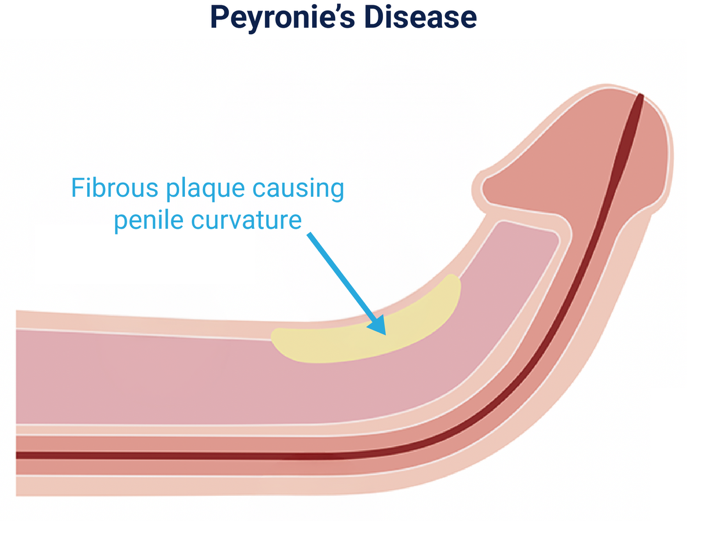
Peyronie's disease is not cancer, and it is not a sexually transmitted infection. However, it can be physically uncomfortable, sexually limiting, and emotionally distressing. Some men notice only a small change in shape. Others develop painful erections, difficulty with intercourse, erectile dysfunction, loss of penile length, or anxiety about sexual activity.
Early evaluation is important because Peyronie's disease can change over time. The earlier the condition is identified, the easier it is to monitor progression, protect erectile function, reduce pain, and start conservative rehabilitation strategies.
Early Signs to Watch For
Peyronie's disease often begins subtly. Many men first notice pain with erections or a new area of firmness along the shaft of the penis. Others notice that the penis curves in a new direction during erection.
Common early signs include:
- New penile curvature
- Painful erections
- A firm lump, band, or plaque under the skin
- Penile narrowing or "hourglass" shape
- Loss of penile length
- Indentation or hinge effect during erection
- Erectile dysfunction or reduced rigidity
- Difficulty with penetration
- Anxiety, avoidance, or reduced sexual confidence
A mild curve that has been present for life is not the same as Peyronie's disease. A new or changing curve, especially when paired with pain or a palpable plaque, deserves evaluation.
What Causes Peyronie's Disease?
Peyronie's disease is thought to develop when the penis heals abnormally after microtrauma. This may occur during sexual activity, sports, pelvic trauma, pelvic surgery, prostate cancer treatment, or other mechanical stress. Many men do not remember a specific injury. Instead, repeated small stresses may trigger inflammation and scar formation over time.
The plaque that forms is not ordinary skin scar tissue. It develops in the deeper structural layer responsible for erection rigidity. When that tissue loses elasticity, the affected side cannot stretch normally during erection. The result is curvature, indentation, shortening, or deformity.
Risk factors may include age, erectile dysfunction, diabetes, smoking, Dupuytren's contracture, family history, low testosterone, pelvic surgery, prostate cancer treatment, and connective tissue disorders. Poor erection rigidity can also increase risk because a partially rigid erection is more likely to buckle during intercourse.
Active and Stable Phases
Peyronie's disease is often described in two phases.
The active phase is the earlier, changing phase. Pain is more common during this stage, and curvature may worsen, improve, or shift over time. This phase can last months, and sometimes longer. Conservative management is especially important here because the goal is to reduce pain, support tissue health, preserve length, and limit functional decline while the condition is still evolving.
The stable phase occurs when pain has usually improved and the curve or deformity has stopped changing. More invasive treatments, including Xiaflex or surgery, are typically considered only after the condition has stabilized, depending on the severity of curvature, erectile function, plaque characteristics, and patient goals.
When Evaluation is Warranted
Men should seek evaluation if there is a new penile curve, painful erections, a lump or plaque, loss of length, difficulty with intercourse, or erectile dysfunction. Evaluation is also important when curvature is worsening, when the penis bends sharply at one point, or when there is an hourglass deformity that causes instability.
A clinical evaluation may include a detailed sexual and medical history, physical exam, assessment of erectile function, review of medications and risk factors, and measurement of curvature. In some cases, penile duplex ultrasound may be recommended to evaluate plaque size, location, calcification, and penile blood flow.
This distinction matters. A softer, earlier plaque may behave differently than a larger calcified plaque. Conservative treatment should be matched to the phase of disease, tissue characteristics, erectile function, pain level, and patient goals.
What Non-Surgical Treatment Can Do
Non-surgical treatment is not about promising to erase every plaque or create a perfectly straight erection. The practical goals are to reduce pain, preserve or improve penile length, improve rigidity, support healthier tissue remodeling, reduce curvature progression when possible, and restore confidence with sexual activity.
Treatment is individualized based on disease phase, degree of curvature, plaque characteristics, erectile function, pain, goals, and whether the patient is pursuing Xiaflex or surgical care with a urologist.
Xiaflex
Xiaflex is the brand name for collagenase clostridium histolyticum, an injectable enzyme treatment used by trained urologists for selected patients with stable Peyronie's disease. It is intended to help reduce curvature by enzymatically weakening collagen within the plaque, followed by modeling and mechanical rehabilitation.
Xiaflex is not for every patient. It is typically considered for stable disease with significant curvature and adequate erectile function. It does not directly treat erectile dysfunction or penile pain.
For patients who do receive Xiaflex, penile rehabilitation is essential. The injection is only one part of the process. Modeling, traction, erection optimization, sexual activity guidance, and follow-up measurements all influence the outcome. Without rehabilitation, patients may miss the opportunity to preserve length, improve mechanics, and safely remodel tissue after treatment.
After Xiaflex, the plaque has been chemically disrupted, but tissue remodeling still depends on mechanical loading and healing. This is similar to other collagen-based tissues in the body: the treatment creates an opportunity, but the tissue still needs guided remodeling.
Penile Rehabilitation
Penile rehabilitation is central to conservative Peyronie's care. The penis is vascular and mechanically responsive tissue. When erections become painful, curved, or unreliable, men often reduce sexual activity. Nocturnal or stimulated erections may also become less effective if erectile dysfunction is present. Over time, reduced erectile tissue stretch can contribute to further loss of length, reduced rigidity, and worsening sexual confidence.
A penile rehabilitation plan may include medications to support erection quality, traction or vacuum therapy when appropriate, pelvic floor and hip assessment, vascular support, sexual counseling, and progressive return to comfortable sexual activity. The goal is to keep the tissue as healthy and functional as possible while avoiding aggressive maneuvers that could worsen irritation.
Therapeutic Ultrasound
Therapeutic ultrasound is a non-invasive treatment that uses high-frequency sound waves to deliver mechanical and thermal energy into soft tissue. In rehabilitation medicine, ultrasound has been used for decades to support tissue heating, blood flow, pain reduction, collagen extensibility, and soft tissue mobility.
For Peyronie's disease, therapeutic ultrasound is used differently than diagnostic ultrasound. Diagnostic ultrasound is used to image the plaque. Therapeutic ultrasound is used as a treatment directed at the plaque and surrounding tissue. A randomized controlled trial evaluated therapeutic ultrasound in men with Peyronie's disease and found a significant improvement in curvature and function. Therapeutic ultrasound should not be presented as a guaranteed plaque-removal treatment. It is best viewed as one tool within a broader penile rehabilitation program.
Penile Traction Therapy
Penile traction therapy uses a medical traction device to apply a controlled stretch to the penis over time. This may help preserve length and, in selected patients, improve curvature. Traction is not a quick fix. It requires consistency, appropriate device selection, proper fit, and gradual progression. Many patients struggle with traction therapy, and it is not a fit for everyone.
Vacuum Erection Therapy
Vacuum erection devices use negative pressure to draw blood into the penis. In Peyronie's disease, vacuum therapy may help maintain tissue oxygenation, support erectile tissue expansion, and assist with penile rehabilitation. It may be used as part of a conservative program or alongside other treatments.
Vacuum therapy should be comfortable and controlled. It should not cause bruising, numbness, or pain. Patients with bleeding risk, anticoagulant use, or significant penile pain should be guided carefully.
Shockwave Therapy
Shockwave therapy may help some men with Peyronie's-related pain, especially during the active phase. It is important to be precise about expectations. Shockwave therapy is not considered a proven treatment for reducing penile curvature or plaque size in Peyronie's disease.
In a conservative clinic setting, shockwave may be considered for pain modulation and tissue sensitivity, not as a stand-alone "plaque removal" treatment. It is usually most appropriate when paired with erectile function optimization, traction or vacuum therapy when appropriate, pelvic floor rehabilitation, therapeutic ultrasound, and urology coordination.
Pelvic Floor and Neuromuscular Rehabilitation
Peyronie's disease is not only a plaque problem. It can change how a patient uses the pelvic floor, hips, trunk, and nervous system during sexual activity. Pain, anxiety, erectile instability, and guarding can increase pelvic floor tension. This can contribute to pelvic pain, premature ejaculation, erectile difficulty, urinary urgency, or discomfort with arousal.
Pelvic floor rehabilitation for men is not simply Kegels. Many patients need downtraining, breathing mechanics, relaxation, coordination, hip mobility, core control, and neuromuscular retraining. For patients with erectile dysfunction, pelvic pain, or anxiety around erections, pelvic floor and sexual function rehabilitation can be an important part of restoring confidence and function.
Verapamil
Verapamil is a calcium-channel blocker that has been used as an intralesional injection for Peyronie's disease. It is not FDA-approved specifically for Peyronie's disease, but some urologists use it off-label, particularly when Xiaflex is not appropriate, not available, not covered, or not desired.
The rationale is that verapamil may influence fibroblast activity, collagen remodeling, and plaque biology. However, the clinical evidence is mixed, and improvements are usually modest when they occur. Verapamil is not considered a guaranteed curvature-correcting treatment. Potential side effects can include bruising, pain at the injection site, dizziness, nausea, and local swelling. If verapamil is used, it should still be paired with a rehabilitation plan that addresses erectile function, traction or vacuum therapy when appropriate, and safe sexual mechanics.
Platelet-Rich Plasma
Platelet-rich plasma, or PRP, is a regenerative therapy made from a patient's own blood. The blood is processed to concentrate platelets and plasma proteins, which contain growth factors and signaling molecules involved in tissue repair.
PRP has attracted interest in Peyronie's disease because the condition involves fibrosis, collagen remodeling, inflammation, erectile function, and tissue healing. Among regenerative approaches, PRP has the most human clinical data. Early studies, including a randomized placebo-controlled crossover trial, prospective cohort data, and a pilot study combining PRP with percutaneous needle tunneling, suggest possible modest curvature improvement and an acceptable short-term safety profile.
However, PRP remains investigational for Peyronie's disease. Studies vary in PRP preparation method, platelet concentration, activation method, injection technique, number of treatments, use of needle tunneling, and whether patients also used traction or other therapies. Because of this, it is difficult to know which protocol is best or which patients are most likely to benefit.
PRP should not be marketed as a cure for Peyronie's disease. A more responsible way to frame PRP is as a biologically plausible, still-evolving therapy that may be considered selectively after discussing uncertainty, cost, alternatives, and realistic goals. There may also be benefit in using PRP some time after Xiaflex therapy.
Stem Cell Therapy
Bone marrow aspirate concentrate, often abbreviated BMAC, and adipose-derived stem cell therapies are also being explored for Peyronie's disease. The scientific rationale is based on fibrosis biology, inflammation, collagen remodeling, and erectile tissue health.
Preclinical studies in animal models suggest that bone marrow-derived mesenchymal stem cells and adipose-derived stem cells may reduce tunical fibrosis and improve erectile function when used early in disease development. These findings are biologically interesting, but they do not prove effectiveness in humans.
At this time, BMAC and stem cell therapies for Peyronie's disease have essentially no rigorous human clinical trial evidence. They are not guideline-recommended and should be considered investigational. Patients should be cautious about clinics promising plaque reversal, guaranteed curvature correction, or "stem cell cures" for Peyronie's disease.
Erectile Function Optimization
Erection quality matters in Peyronie's disease. A firm erection is less likely to buckle and may reduce further mechanical stress during intercourse. Erectile dysfunction can also make curvature more functionally limiting.
Treatment may include daily or as-needed PDE5 inhibitors such as tadalafil or sildenafil when appropriate, cardiovascular risk assessment, testosterone evaluation, metabolic labs, sleep apnea screening, and lifestyle interventions. Blood pressure, diabetes risk, cholesterol, smoking, alcohol, body composition, and exercise capacity all influence erectile health.
Optimizing erections does not replace plaque treatment, but it can reduce mechanical risk and improve sexual function.
What Patients Should Avoid
Patients should avoid painful stretching, jelqing, aggressive bending, unregulated injections, online "plaque dissolving" supplements, and devices that cause bruising or numbness. Many oral supplements marketed for Peyronie's disease have limited evidence and may create false hope or delay appropriate care.
Patients should also avoid ignoring erectile dysfunction. Poor rigidity increases buckling risk and can make Peyronie's symptoms worse during sexual activity.
A Better Way to Approach Peyronie's Disease
Peyronie's disease can feel isolating, but it is a treatable men's health condition. Early evaluation helps patients understand what is happening, track whether the condition is changing, protect erectile function, and choose treatment based on the disease phase.
For many men, the best starting point is conservative care: penile rehabilitation, erectile function optimization, therapeutic ultrasound, traction or vacuum therapy when appropriate, pain-focused modalities, pelvic floor rehabilitation, and monitoring.
Regenerative options such as PRP may have a role for selected patients, but they should be discussed honestly as investigational. BMAC and stem cell therapies remain even earlier in development for Peyronie's disease and should not be presented as established treatments. Verapamil may be considered by urology in selected patients, but it still works best when paired with a functional rehabilitation plan.
For patients who need Xiaflex, comprehensive rehabilitation remains essential before, during, and after treatment.
At the Performance Medicine Institute, we take a comprehensive approach to Peyronie's disease by combining men's health evaluation, erectile function optimization, penile rehabilitation, pelvic floor rehabilitation, therapeutic ultrasound, shockwave therapy for pain when appropriate, cautious discussion of regenerative options, and coordination with urology for Xiaflex, verapamil, or surgical care when needed. Contact us to schedule an evaluation.
References
- Abdel Raheem A, Capece M, Kalejaiye O, et al. Safety and effectiveness of collagenase clostridium histolyticum in the treatment of Peyronie's disease using a new modified shortened protocol. BJU Int. 2017;120(5):717-723.
- Alom M, Sharma KL, Toussi A, et al. Efficacy of combined collagenase clostridium histolyticum and RestoreX penile traction therapy in men with Peyronie's disease. J Sex Med. 2019;16(6):891-900.
- Anaissie J, DeLay KJ, Yafi FA, et al. Traction therapy for penile shortening and deformity associated with Peyronie's disease: a systematic review and meta-analysis. J Sex Med. 2016;13(3):546-553.
- Asmundo MG, Durukan E, von Rohden E, et al. Platelet-rich plasma therapy in erectile dysfunction and Peyronie's disease: a systematic review of the literature. World J Urol. 2024;42(1):359.
- Castiglione F, Hedlund P, Van der Aa F, et al. Intratunical injection of human adipose tissue-derived stem cells prevents fibrosis and is associated with improved erectile function in a rat model of Peyronie's disease. Eur Urol. 2013;63(3):551-560.
- Dachille G, Panunzio A, Bizzotto L, et al. Platelet-rich plasma intra-plaque injections rapidly reduce penile curvature and improve sexual function in Peyronie's disease patients: results from a prospective large-cohort study. World J Urol. 2025;43(1):306.
- Gelbard M, Goldstein I, Hellstrom WJG, et al. Clinical efficacy, safety and tolerability of collagenase clostridium histolyticum for the treatment of Peyronie disease in two randomized phase 3 studies. J Urol. 2013;190(1):199-207.
- Hatzichristodoulou G, Meisner C, Gschwend JE, Stenzl A, Lahme S. Extracorporeal shock wave therapy in Peyronie's disease: results of a placebo-controlled, prospective, randomized, single-blind study. J Sex Med. 2013;10(11):2815-2821.
- Ledesma BR, Velasquez DA, Egemba C, et al. A phase 2 randomized, placebo-controlled crossover trial to evaluate safety and efficacy of platelet-rich plasma injections for Peyronie's disease: clinical trial update. Int J Impot Res. 2024;36(8):813-817.
- Milios JE, Ackland TR, Green DJ. Peyronie's disease and the role of therapeutic ultrasound: a randomized controlled trial. J Rehab Therapy. 2020;2(2):32-39.
- Nehra A, Alterowitz R, Culkin DJ, et al. Peyronie's disease: AUA guideline. J Urol. 2015;194(3):745-753.
- Ralph D, Gonzalez-Cadavid N, Mirone V, et al. The management of Peyronie's disease: evidence-based 2010 guidelines. J Sex Med. 2010;7(7):2359-2374.
- Rosenberg JE, Ergun O, Hwang EC, et al. Non-surgical therapies for Peyronie's disease. Cochrane Database Syst Rev. 2023;7:CD012206.
- Wang W, Ding W, Zhang X, et al. Intratunical injection of rat-derived bone marrow mesenchymal stem cells prevents fibrosis and is associated with increased Smad7 expression in a rat model of Peyronie's disease. Stem Cell Res Ther. 2022;13(1):390.
- Zugail AS, Alshuaibi M, Lombion S, Beley S. Safety and feasibility of percutaneous needle tunneling with platelet-rich plasma injections for Peyronie's disease in the outpatient setting: a pilot study. Int J Impot Res. 2024;36(2):140-145.