
Treatment Options for Thyroid Disorders To Optimize Health and Physical Performance

How Thyroid Hormone Works
Thyroid hormone affects nearly every tissue in the body. It helps regulate resting metabolic rate, body temperature, heart rate, cholesterol metabolism, bowel motility, brain function, menstrual function, muscle performance, tendon and connective tissue turnover, and energy production inside cells.
Thyroid hormone production is controlled by a feedback loop called the hypothalamic-pituitary-thyroid axis. The hypothalamus, a control center in the brain, releases thyrotropin-releasing hormone, or TRH. TRH signals the pituitary gland to release thyroid-stimulating hormone, or TSH. TSH then travels through the bloodstream to the thyroid gland, where it stimulates thyroid hormone production.
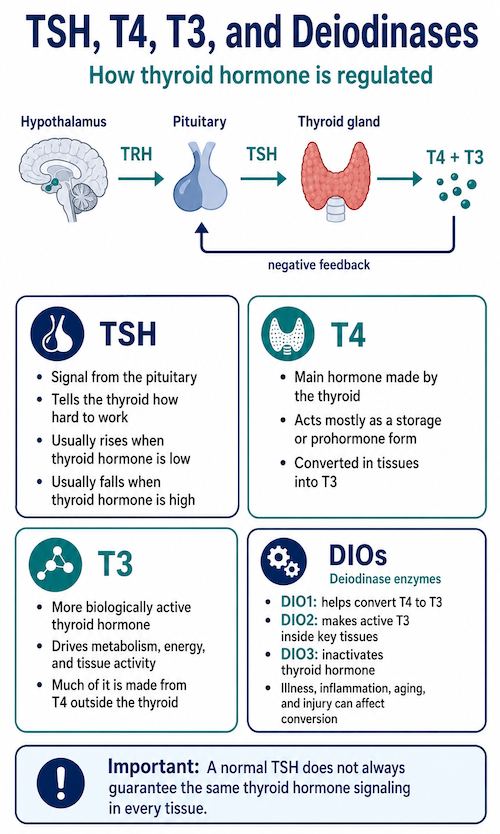
TSH is one of the most important thyroid lab markers because it reflects how strongly the brain and pituitary are asking the thyroid gland to work. When thyroid hormone levels are low, the pituitary usually responds by increasing TSH. When thyroid hormone levels are high, the pituitary usually lowers TSH. This is why a high TSH often suggests underactive thyroid function, while a low TSH may suggest too much thyroid hormone exposure.
The thyroid gland primarily produces T4, with a smaller amount of T3. T4 is often thought of as a storage or prohormone form. T3 is the more biologically active hormone at the thyroid hormone receptor. Most circulating T3 is not produced directly by the thyroid gland. Instead, it is produced when tissues convert T4 into T3.
This conversion is controlled by enzymes called deiodinases.
There are three main deiodinase enzymes:
- DIO1 helps convert T4 into T3 and also helps clear inactive thyroid hormone metabolites. It is especially important in tissues such as the liver, kidney, and thyroid.
- DIO2 converts T4 into active T3 inside specific tissues. It is important in the brain, pituitary gland, skeletal muscle, brown fat, and other tissues where local thyroid hormone signaling matters.
- DIO3 inactivates thyroid hormone by converting T4 into reverse T3 and T3 into inactive metabolites. This can reduce thyroid hormone activity inside tissues.
TSH is very useful, but it is not a perfect measure of thyroid hormone activity in every tissue. The pituitary gland has its own local thyroid hormone regulation and is especially sensitive to T4-to-T3 conversion through DIO2. Because of this, the pituitary may sense adequate thyroid hormone exposure even when some other tissues may have different levels of thyroid hormone signaling.
This is one reason some patients can have a TSH in the reference range but still report symptoms that feel consistent with low thyroid function. Sometimes those symptoms are not from the thyroid at all. Sleep apnea, anemia, low testosterone, menopause, depression, chronic stress, under-fueling, medication effects, autoimmune disease, insulin resistance, and vitamin deficiencies can all overlap with hypothyroid symptoms. In other cases, thyroid hormone transport, conversion, receptor sensitivity, inflammation, illness, or medication effects may influence tissue-level thyroid hormone action.
Thyroid labs also need to be interpreted together. TSH gives important information about pituitary feedback. Free T4 shows the available circulating T4 supply. Free T3 can help estimate circulating active hormone, especially when a patient is taking a T3-containing medication such as desiccated thyroid extract or liothyronine. Thyroid antibodies can help identify autoimmune thyroid disease such as Hashimoto's thyroiditis.
This matters because thyroid hormone action is not determined only by the amount of T4 in the bloodstream. It is also affected by how well tissues transport thyroid hormone into cells, how much T4 is converted into T3, how much hormone is inactivated, and how sensitive thyroid hormone receptors are inside each tissue.
In other words, two patients can have similar TSH and free T4 levels but still have different tissue-level thyroid hormone signaling. That does not mean TSH should be ignored. It means TSH should be interpreted in context, alongside symptoms, free thyroid hormone levels, medication timing, age, health status, heart rhythm risk, bone health, and the reason thyroid medication is being adjusted.
Hypothyroidism
Hypothyroidism occurs when the body does not have enough thyroid hormone activity to meet physiologic needs. This can happen because the thyroid gland is not producing enough hormone, because thyroid hormone production is impaired by autoimmune disease, surgery, radiation, medications, iodine imbalance, or pituitary dysfunction, or because thyroid hormone signaling is altered by illness, inflammation, or impaired conversion of T4 to T3.
The most common cause in the United States is Hashimoto's thyroiditis, an autoimmune condition in which the immune system gradually damages the thyroid gland. As thyroid hormone output falls, the pituitary gland usually responds by increasing TSH. This is why primary hypothyroidism often shows an elevated TSH, with low or low-normal free T4 depending on severity.
Common symptoms can include fatigue, cold intolerance, weight gain or difficulty losing weight, constipation, dry skin, hair thinning, brain fog, low mood, slowed heart rate, menstrual changes, muscle aches, joint stiffness, elevated cholesterol, and reduced exercise tolerance. These symptoms can overlap with many other conditions, so diagnosis should be based on both symptoms and appropriate lab testing.
Lab evaluation may include TSH, free T4, free T3 in selected cases, thyroid peroxidase antibodies, thyroglobulin antibodies, lipid markers, iron status, B12, vitamin D, sex hormones, and metabolic testing when symptoms suggest a broader issue. A normal or near-normal TSH does not always explain every symptom, but it remains an important safety and treatment marker.
Levothyroxine is the standard first-line treatment for most patients with hypothyroidism. It provides synthetic T4 and relies on the body to convert T4 into active T3. Some patients who remain symptomatic despite optimized levothyroxine may be considered for T3-containing therapy, such as levothyroxine plus liothyronine or desiccated thyroid extract, when clinically appropriate. The goal is not simply to increase thyroid hormone levels, but to restore thyroid hormone signaling while protecting heart rhythm, sleep, mood, and bone health.
Hyperthyroidism
Hyperthyroidism occurs when the body has too much thyroid hormone activity. This may happen because the thyroid gland is overproducing hormone, because stored thyroid hormone is being released during thyroid inflammation, or because a patient is taking too much thyroid medication.
Common causes include Graves' disease, toxic multinodular goiter, toxic thyroid adenoma, thyroiditis, excessive iodine exposure, certain medications, and thyroid hormone overtreatment. Graves' disease is an autoimmune condition in which antibodies stimulate the thyroid gland to produce excess hormone.
Symptoms can include rapid heart rate, palpitations, anxiety, shakiness, heat intolerance, sweating, insomnia, unexplained weight loss, increased bowel movements, muscle weakness, menstrual changes, shortness of breath with exertion, and reduced exercise tolerance. Some patients feel "wired but tired," with high internal stimulation but poor recovery. In older adults, hyperthyroidism can sometimes present more subtly, with fatigue, weight loss, atrial fibrillation, or worsening bone loss.
Lab findings often include a low TSH with elevated free T4 and/or free T3, depending on the cause and severity. Additional testing may include thyroid stimulating immunoglobulin or TSH receptor antibodies, thyroid peroxidase antibodies, thyroid ultrasound, radioactive iodine uptake scan when appropriate, heart rhythm evaluation, liver function testing, CBC, and bone density testing in higher-risk patients.
Hyperthyroidism requires careful evaluation because excess thyroid hormone can strain the cardiovascular system and accelerate bone loss. Potential complications include atrial fibrillation, high-output cardiac stress, osteoporosis, muscle wasting, and, in severe cases, thyroid storm.
Treatment depends on the cause. Options may include beta blockers for symptom control, antithyroid medications such as methimazole or propylthiouracil, radioactive iodine therapy, thyroid surgery, or simply monitoring if the cause is temporary thyroiditis. If hyperthyroidism is caused by excessive thyroid hormone replacement, treatment usually involves reducing or holding thyroid medication under clinician supervision.
For patients using desiccated thyroid extract or liothyronine, hyperthyroid symptoms can occur if the T3 exposure is too high, even if the patient initially feels more energetic. This is why TSH, free T4, free T3, resting heart rate, sleep quality, mood, bone health, and symptoms should be monitored carefully during thyroid optimization.
Levothyroxine (T4) and Liothyronine (T3) as Traditional Thyroid Medications
Levothyroxine (Synthroid) and liothyronine (Cytomel) are synthetic thyroid hormone medications. Levothyroxine, also called LT4, is the standard first-line treatment for most patients with hypothyroidism. It provides T4, the main hormone produced by the thyroid gland, and relies on the body to convert T4 into active T3 through deiodinase enzymes in tissues throughout the body.
Liothyronine, also called LT3, provides synthetic T3 directly. T3 is the more active thyroid hormone at the thyroid hormone receptor, but it is also faster acting and shorter lived than T4. Because of this, liothyronine can produce higher peaks and more noticeable effects after dosing, including palpitations, anxiety, shakiness, or sleep disruption in sensitive patients.
Levothyroxine and liothyronine have both been used for decades. Synthetic T4 therapy became widely available in the 1950s, with Synthroid introduced in 1955 and later formally approved by the FDA in 2002. Synthetic T3, sold as liothyronine or Cytomel, received initial U.S. approval in 1956.
Some patients who remain symptomatic on levothyroxine may be considered for carefully monitored combination therapy with levothyroxine plus low-dose liothyronine. This approach allows the T4 and T3 components to be adjusted separately, which can be helpful for patients who need more precise dosing than desiccated thyroid extract provides.
Levothyroxine plus liothyronine is not necessary for most patients, and it should not be used simply to push thyroid hormone levels higher. The goal is to improve symptoms while keeping TSH, free T4, free T3, heart rhythm, sleep, mood, and bone health in a safe range. For many patients, levothyroxine alone remains the best option. For selected patients with persistent symptoms despite optimized T4 therapy, a cautious trial of T3-containing therapy may be reasonable when guided by symptoms, labs, risk factors, and follow-up monitoring.
How Illness, Inflammation, Injury, and Aging Can Affect T4 To T3 Conversion
The body can change thyroid hormone metabolism during stress. Severe illness, major inflammation, surgery, injury, calorie restriction, infection, and chronic disease can all shift thyroid hormone physiology. This is sometimes called non-thyroidal illness syndrome or low T3 syndrome.
In these states, serum T3 may fall, reverse T3 may rise, and deiodinase activity may change. The pattern is complex and can vary by tissue. For example, inflammation can reduce DIO1 activity in the liver, alter DIO2 activity in the brain and other tissues, and increase pathways that inactivate thyroid hormone in some settings. The result can be lower circulating T3 and altered tissue-level thyroid hormone availability.
This response may be partly adaptive. During acute illness, the body may reduce thyroid hormone activity to conserve energy and limit excessive catabolism. That is one reason clinicians are cautious about simply treating every low T3 level during severe illness.
However, in chronic or repeated stress states, the picture can be more complicated. Aging, chronic inflammation, obesity, insulin resistance, autoimmune disease, overtraining, under-recovery, major injury, chronic pain, and prolonged calorie restriction may all influence thyroid hormone conversion, thyroid hormone signaling, or symptom expression.
This does not mean every patient with fatigue or low T3 needs DTE. It does mean that T4-only therapy may not fully address symptoms in every patient, especially if tissue-level conversion to T3 is impaired or if the patient remains symptomatic despite an appropriate levothyroxine dose.
Boosting Thyroid Production And Conversion Efficiency
Healthy thyroid function depends on both thyroid hormone production and thyroid hormone conversion. The thyroid gland needs adequate iodine, selenium, zinc, iron, vitamin A, vitamin D, magnesium, B vitamins, protein, and overall energy availability to produce and regulate thyroid hormones. Selenium is especially important because deiodinase enzymes, which help convert T4 into active T3, are selenoproteins. Iron deficiency, iodine imbalance, severe calorie restriction, and poor protein intake can all interfere with thyroid hormone production or worsen symptoms that overlap with hypothyroidism.
T4 to T3 conversion is also affected by the body's overall physiologic state. During acute illness, injury, inflammation, overtraining, poor sleep, rapid weight loss, or prolonged under-fueling, the body may reduce T3 production as part of an energy-conservation response. This can be adaptive in the short term, but when the stressor is chronic, patients may experience fatigue, cold intolerance, poor recovery, low libido, constipation, brain fog, or reduced exercise tolerance. Supporting normal conversion often starts with adequate calories, adequate protein, nutrient repletion, sleep recovery, and avoiding aggressive dieting.
Lifestyle factors can also improve the environment for thyroid hormone signaling. Resistance training helps preserve skeletal muscle, which is a major metabolic tissue and an important target of thyroid hormone action. Improving insulin sensitivity, reducing excess visceral fat, treating sleep apnea, limiting excess alcohol, managing chronic inflammation, and supporting liver and kidney health may all help normalize thyroid hormone metabolism. The goal is not to force T3 higher in every patient, but to reduce the physiologic barriers that impair thyroid production, conversion, and tissue-level response.
Patients should be cautious with "thyroid boosting" supplements. Some contain high-dose iodine, glandular extracts, stimulants, or undisclosed thyroid-like compounds that can cause palpitations, anxiety, insomnia, abnormal labs, or unsafe thyroid hormone exposure. A better approach is to identify the bottleneck with appropriate testing, including thyroid labs, iron studies, vitamin D, B12, metabolic markers, medication review, sleep assessment, and nutrition review. In selected patients who remain symptomatic despite optimized levothyroxine and a supportive lifestyle foundation, T3-containing therapy may be considered with careful monitoring.
Why T3-Containing Therapy May Help Some Patients
Levothyroxine works by providing T4 and relying on the body to convert enough T4 into T3. For many patients, this works well. But some patients on levothyroxine have normal TSH levels while continuing to experience symptoms that feel hypothyroid, including fatigue, brain fog, cold intolerance, low mood, weight gain, constipation, poor exercise recovery, or reduced exercise tolerance.
There are several possible explanations.
One possibility is that the symptoms are not caused by thyroid hormone status. Sleep apnea, anemia, depression, chronic stress, low testosterone, menopause, insulin resistance, low calorie intake, overtraining, vitamin deficiencies, autoimmune disease, and medication effects can all overlap with hypothyroid symptoms.
Another possibility is that thyroid hormone levels in the blood do not perfectly reflect thyroid hormone action inside each tissue. Deiodinase activity, thyroid hormone transport, receptor sensitivity, inflammation, and illness physiology can all affect local thyroid hormone signaling.
This is where T3-containing therapy may have a role for selected patients. DTE provides both T4 and T3. Levothyroxine plus liothyronine also provides both hormones, but allows the T4 and T3 doses to be adjusted separately.
For patients who remain symptomatic on optimized levothyroxine, a carefully monitored trial of T3-containing therapy may be reasonable in selected cases. This is most appropriate when the diagnosis of hypothyroidism is clear, levothyroxine absorption and timing have been reviewed, other causes of symptoms have been considered, and the patient understands the potential benefits and risks.
The goal is not to push thyroid hormone levels above normal. The goal is to restore thyroid hormone signaling in a way that improves symptoms while protecting heart rhythm, bone health, sleep, mood, and long-term safety.
What is Desiccated Thyroid Extract?
Desiccated thyroid extract, often abbreviated DTE, is a thyroid hormone medication made from dried porcine thyroid gland. Unlike levothyroxine, which contains synthetic T4 only, DTE contains both thyroxine, or T4, and triiodothyronine, or T3.
Common US desiccated thyroid extract products include Armour Thyroid, NP Thyroid, Niva Thyroid, ANI Thyroid, Vitruvias Thyroid USP, and EvexiTHROID. These medications are sometimes described as "natural thyroid" because they are derived from animal thyroid tissue rather than synthesized as a single hormone molecule.
That does not automatically mean DTE is safer, stronger, or better for every patient. It means the hormone composition is different. Because DTE contains both T4 and T3, it behaves differently from levothyroxine and requires careful dosing, follow-up lab testing, and individualized monitoring.
A Brief History of Thyroid Hormone Treatment
Desiccated thyroid extract was one of the earliest effective treatments for hypothyroidism. Before modern synthetic thyroid hormone medications were widely available, thyroid extract was commonly used to treat symptoms of thyroid hormone deficiency, including fatigue, cold intolerance, constipation, dry skin, weight gain, slowed heart rate, menstrual changes, and cognitive slowing.
Over time, levothyroxine became the standard treatment for most patients with hypothyroidism. There were several reasons for this shift. Levothyroxine provides a stable dose of T4, has predictable pharmacokinetics, is easy to monitor with TSH and free T4, and relies on the body to convert T4 into T3 in peripheral tissues.
For many patients, levothyroxine works very well. TSH normalizes, symptoms improve, and long-term safety data are strong. However, some patients continue to report persistent symptoms despite having thyroid labs that appear acceptable on levothyroxine. This has led to renewed interest in T3-containing therapies, including DTE and combination therapy with levothyroxine plus liothyronine.
How DTE is Different from Levothyroxine
The main difference is hormone composition.
Levothyroxine contains T4 only. T4 is a prohormone, meaning it is converted into active T3 by deiodinase enzymes in tissues throughout the body.
Desiccated thyroid extract contains both T4 and T3. One grain, usually listed as 60 mg or 65 mg depending on the product convention, contains approximately 38 mcg of T4 and 9 mcg of T3.
That T3 content is clinically important. T3 is the more active thyroid hormone at the thyroid hormone receptor. It also has a shorter half-life than T4, which means blood levels can rise more quickly after dosing and fluctuate more during the day.
The human thyroid normally secretes much more T4 than T3, with an approximate T4:T3 secretion ratio closer to 14:1. DTE has a T4:T3 ratio closer to 4:1. That means DTE provides proportionally more T3 than the human thyroid naturally releases.
This does not mean DTE is automatically harmful. It does mean the dose must be selected carefully, especially in patients who are sensitive to T3, have palpitations, have atrial fibrillation risk, have osteoporosis risk, are older, or are taking higher doses.
Potential Benefits of DTE
Research comparing DTE with levothyroxine has not shown that DTE is superior for the overall population of patients with hypothyroidism. In randomized trials, quality of life and symptom scores are generally similar between DTE and levothyroxine when patients are studied as a whole.
However, there are several reasons DTE remains clinically relevant.
First, some patients prefer it. In crossover trials and systematic reviews, a meaningful percentage of patients report preference for T3-containing therapy, including DTE or levothyroxine plus liothyronine.
Second, some patients experience modest weight loss while using DTE compared with levothyroxine. This does not make DTE a weight loss medication, but it is a consistent enough finding to mention in a balanced discussion.
Third, the most symptomatic subgroup of patients on levothyroxine may respond differently than the average patient. In some studies, patients who remain the most symptomatic while taking levothyroxine report more improvement with T3-containing therapy. This may include improvements in symptom scores, mood measures, and patient preference.
Fourth, DTE provides both T4 and T3 in a single medication. Some patients who do not feel well on T4-only therapy are interested in a treatment that includes active T3. This may be reasonable to discuss when symptoms persist despite appropriate levothyroxine dosing, good adherence, and evaluation for other causes of fatigue, weight gain, mood changes, poor recovery, or low metabolism.
Patient Preference Matters, But it is Not the Only Factor
Patient preference is important in thyroid care. Many patients know when they do not feel like themselves, even when standard thyroid labs appear "normal." Symptoms such as fatigue, brain fog, low mood, cold intolerance, constipation, hair changes, low libido, weight gain, poor exercise tolerance, and muscle aches can be frustrating and difficult to interpret.
However, symptoms are not specific to thyroid disease. Low testosterone, anemia, sleep apnea, depression, chronic stress, under-fueling, low protein intake, insulin resistance, menopause, overtraining, medication side effects, vitamin deficiencies, and inflammatory conditions can all produce overlapping symptoms.
This is why DTE should not be used as a shortcut for a complete evaluation. A patient-centered approach means listening to symptoms, reviewing thyroid labs, considering patient preference, and also looking for other treatable contributors.
When DTE is considered, the goal is not to chase a feeling by escalating thyroid dose. The goal is to find the lowest effective dose that improves symptoms while keeping thyroid labs and safety markers in an appropriate range.
Why Guidelines Still Prefer Levothyroxine First
Major thyroid guidelines generally recommend levothyroxine as first-line therapy for hypothyroidism. This is because levothyroxine is effective for most patients, has extensive long-term safety data, provides stable T4 levels, and is easier to monitor.
Guidelines have been more cautious about DTE because of several concerns:
- DTE contains a higher proportion of T3 than the human thyroid normally secretes
- T3 levels may peak after dosing
- Long-term cardiovascular and bone safety data are limited
- Some patients may develop symptoms of excess thyroid hormone
- Dose titration can be less flexible than separate T4 and T3 prescriptions
- DTE products are not considered standard first-line therapy by major endocrine societies
This does not mean DTE should never be used. It means it should be used selectively, with informed discussion and follow-up.
Safety Considerations
Too much thyroid hormone can cause problems even when the intention is symptom improvement. Potential signs of excessive thyroid hormone include palpitations, anxiety, shakiness, insomnia, heat intolerance, increased sweating, diarrhea, unexplained weight loss, elevated resting heart rate, or worsening exercise intolerance.
Long-term overtreatment can increase risk for atrial fibrillation and bone loss, especially in older adults and postmenopausal women. Patients with known heart rhythm disorders, coronary artery disease, osteoporosis, or high fracture risk need extra caution.
DTE is usually not the preferred approach during pregnancy because fetal brain development depends heavily on adequate and stable T4 availability. Patients who are pregnant, trying to conceive, or planning pregnancy should discuss thyroid medication choices carefully with their clinician.
Monitoring DTE
Monitoring should be individualized, but commonly includes:
- TSH
- Free T4
- Free T3
- Thyroid peroxidase antibodies when autoimmune thyroid disease is suspected
- Heart rate and blood pressure
- Symptoms of under-treatment or over-treatment
- Bone density testing when risk is present
- Medication and supplement review
After a thyroid dose change, labs are often rechecked after about 6 to 8 weeks. This gives the body time to reach a new steady state, especially for T4-containing medications.
Timing matters. Because DTE contains T3, free T3 levels may vary depending on when blood is drawn relative to the dose. A clinician may ask patients to keep lab timing consistent so results can be interpreted more accurately.
Approximate Levothyroxine to DTE Conversion Chart
The following table compares approximate levothyroxine starting doses with commonly listed U.S. desiccated thyroid extract products.
The conversion uses the starting-dose formula from a randomized crossover study:
60 mg DTE approximately corresponds to 100 mcg levothyroxine.
These are approximate starting conversions, not exact bioequivalent doses. Thyroid function testing and individualized dose adjustment are still required.
This chart should be interpreted as an approximate starting conversion only. It should not be treated as an exact levothyroxine equivalent.
Desiccated thyroid extract contains both T4 and T3. Because T3 is more potent and faster acting than T4, the amount of T4 physically contained in DTE is not the same thing as the approximate levothyroxine dose conversion.
For example, 60 mg DTE contains approximately 38 mcg T4 and 9 mcg T3, but it is often used as an approximate starting substitution for 100 mcg levothyroxine in clinical conversion charts.
Different clinical trials have used somewhat different dose conversions. Tablet strengths and market availability may also change. Medication changes should be supervised by a qualified clinician.
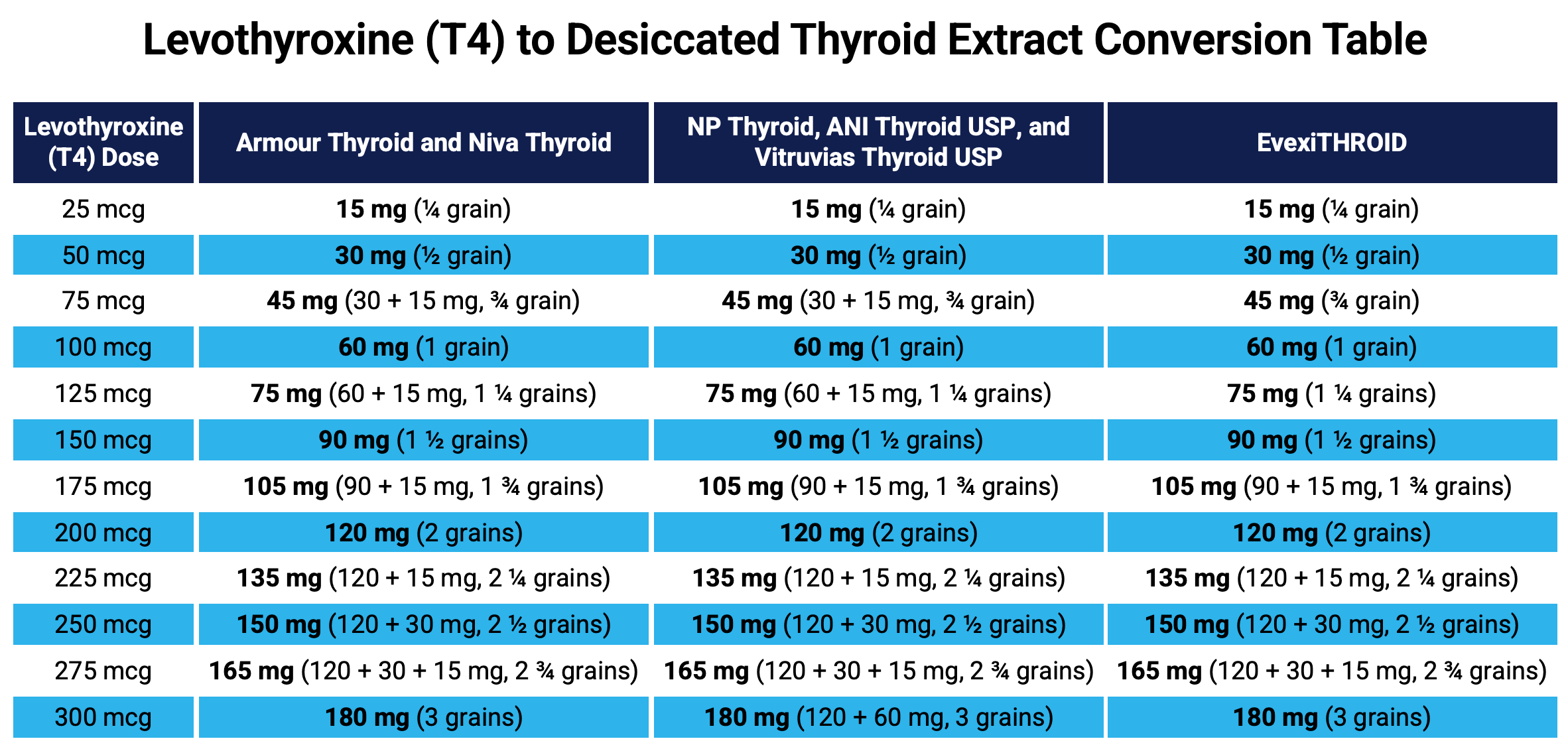
Armour Thyroid and Niva Thyroid are commonly listed in strengths that allow many doses to be prescribed as single tablets, including 15 mg, 30 mg, 60 mg, 90 mg, 120 mg, 180 mg, 240 mg, and 300 mg.
NP Thyroid, ANI Thyroid USP, and Vitruvias Thyroid USP are commonly listed in 15 mg, 30 mg, 60 mg, 90 mg, and 120 mg strengths. Doses above 120 mg generally require combining tablets.
EvexiTHROID is listed with 15 mg, 30 mg, 45 mg, 60 mg, 75 mg, 90 mg, 120 mg, and 180 mg strengths. This is why some intermediate doses may be simpler with EvexiTHROID than with products that do not supply 45 mg or 75 mg tablets.
Considering DTE Versus Levothyroxine and Liothyronine
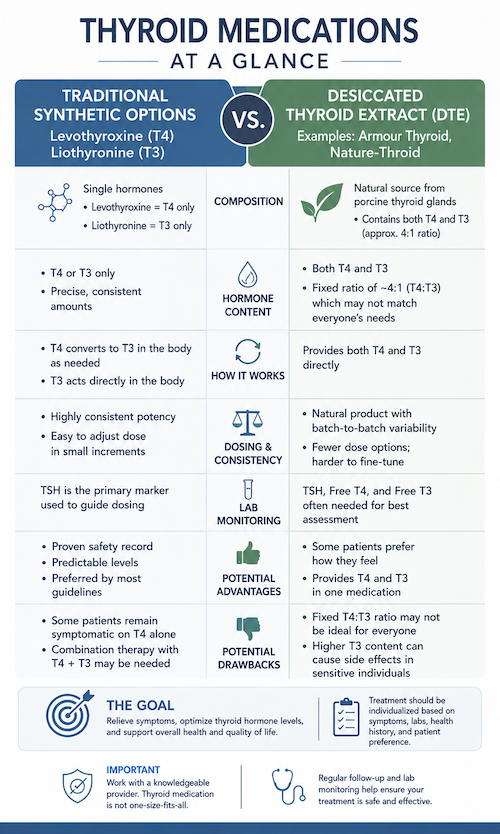
DTE may be worth discussing when a patient has persistent hypothyroid symptoms despite reasonable levothyroxine dosing, appropriate medication timing, and follow-up labs. It may also be considered when a patient has tried levothyroxine and strongly prefers a T3-containing option after an informed discussion of benefits and risks.
However, DTE is not the only way to provide T3. Some patients may be better served by levothyroxine plus low-dose liothyronine because that approach allows the T4 and T3 doses to be adjusted separately. This can be helpful for patients who are sensitive to T3 or need more precise dose control.
The best choice depends on symptoms, labs, heart rhythm risk, bone health, age, pregnancy plans, medication interactions, and patient preference.
A Practical Clinical Approach
A careful thyroid optimization plan usually begins with several questions:
- Is the diagnosis of hypothyroidism clear?
- Is levothyroxine being taken consistently and away from interfering medications or supplements?
- Are TSH, free T4, and sometimes free T3 being interpreted in context?
- Are symptoms truly thyroid-related, or could another condition be contributing?
- Is the patient at higher risk from excess T3 exposure?
- Would DTE or separate T4/T3 therapy be easier to adjust safely?
- What dose conversion should be used as a starting point?
- When should labs be repeated after the change?
Medication timing is also important. Thyroid hormone absorption can be reduced by calcium, iron, magnesium, certain antacids, bile acid binders, and some foods or supplements. Patients should review how they take thyroid medication before assuming the dose is ineffective.
A Better Way to Approach Thyroid Optimization
Thyroid treatment should be individualized. Levothyroxine remains the standard first-line medication for hypothyroidism and works well for many patients. Desiccated thyroid extract may be preferred by some patients and may help selected patients who remain symptomatic on levothyroxine, but it also introduces more T3 exposure and requires careful monitoring.
The goal is not simply to normalize one lab value or switch to a "natural" product. The goal is to restore thyroid hormone balance in a way that improves symptoms, protects long-term heart and bone health, and fits the patient's broader metabolic, hormonal, and functional health picture.
At the Performance Medicine Institute, we take a comprehensive approach to thyroid optimization by combining symptom review, thyroid lab interpretation, metabolic evaluation, body composition testing, medication review, and individualized treatment planning. Contact us to schedule an evaluation.
References
- Ahluwalia R, Baldeweg SE, Boelaert K, et al. Use of liothyronine (T3) in hypothyroidism: Joint British Thyroid Association/Society for Endocrinology consensus statement. Clin Endocrinol (Oxf). 2023;99(2):206-216.
- Bianco AC, Dumitrescu A, Gereben B, et al. Paradigms of dynamic control of thyroid hormone signaling. Endocr Rev. 2019;40(4):1000-1047.
- de Lima Beltrao FE, Carvalhal G, de Almeida Beltrao DC, et al. Treatment Preferences in Patients With Hypothyroidism. J Clin Endocrinol Metab. 2025;110(3):887-900.
- Fliers E, Bianco AC, Langouche L, Boelen A. Thyroid function in critically ill patients. Lancet Diabetes Endocrinol. 2015;3(10):816-825.
- Hoang TD, Olsen CH, Mai VQ, Clyde PW, Shakir MK. Desiccated thyroid extract compared with levothyroxine in the treatment of hypothyroidism: a randomized, double-blind, crossover study. J Clin Endocrinol Metab. 2013;98(5):1982-1990.
- Idrees T, Palmer S, Maciel RMB, Bianco AC. Liothyronine and desiccated thyroid extract in the treatment of hypothyroidism. Thyroid. 2020;30(10):1399-1413.
- Jonklaas J, Bianco AC, Bauer AJ, et al. Guidelines for the treatment of hypothyroidism: prepared by the American Thyroid Association Task Force on Thyroid Hormone Replacement. Thyroid. 2014;24(12):1670-1751.
- McAninch EA, Bianco AC. The history and future of treatment of hypothyroidism. Ann Intern Med. 2016;164(1):50-56.
- Riis KR, Larsen CB, Bonnema SJ. Potential risks and benefits of desiccated thyroid extract for the treatment of hypothyroidism: a systematic review. Thyroid. 2024;34(6):687-701.
- Shakir MKM, Brooks DI, McAninch EA, et al. Comparative effectiveness of levothyroxine, desiccated thyroid extract, and levothyroxine plus liothyronine in hypothyroidism. J Clin Endocrinol Metab. 2021;106(11):e4400-e4413.
- Taylor PN, Medici MM, Hubalewska-Dydejczyk A, Boelaert K. Hypothyroidism. Lancet. 2024;404(10460):1347-1364.
- Uzzan B, Campos J, Cucherat M, et al. Effects on bone mass of long term treatment with thyroid hormones: a meta-analysis. J Clin Endocrinol Metab. 1996;81(12):4278-4289.